
For general education, not medical advice. This guide can’t diagnose you or replace care from your own clinician. If you’re worried about a spot or symptom, see a board-certified dermatologist.
If you live in The Villages, you spend more time in the sun than almost anyone in the country — on the golf course, at the pool, on the pickleball court, riding the cart to dinner. That sunshine is part of what makes life here so good. It is also why a yearly skin cancer screening is one of the most worthwhile 45 minutes you can give yourself.
Skin cancer is the most common cancer in the United States, and Central Florida sees more of it than most places. The reassuring part: when it is caught early, it is almost always highly treatable. A screening is simply how you stay ahead of it. Don't settle for a flashlight exam — here is what a thorough skin cancer screening in The Villages should look like, and how to schedule one.
What Is a Skin Cancer Screening?
A skin cancer screening — also called a full-body skin exam or a full-body scan for skin cancer — is a visual head-to-toe examination of your skin by a trained clinician looking for spots that could be cancerous or precancerous. It is painless, takes about 45 minutes, and requires no preparation beyond removing makeup and nail polish so those areas can be seen.
A complete exam means exactly that: scalp, behind the ears, the face and neck, the back, between the fingers and toes, the soles of the feet, and other areas you cannot easily check yourself. Using a dermatoscope — a handheld magnifier with polarized light — the clinician can see pigment patterns beneath the surface that are invisible to the naked eye, which helps tell a harmless mole from one that deserves a closer look.
Most of what we find at a screening is completely benign. The point of doing it every year is to catch the rare spot that matters while it is small and simple to treat.
Why Screening Matters Here
Skin cancer risk comes down to lifetime ultraviolet exposure, and Central Florida delivers a lot of it — the UV index here regularly reaches 10 or 11. Many Villages residents also moved from northern states, arriving with decades of accumulated sun damage before they ever saw a Florida summer. Add an active, outdoor retirement and the exposure compounds quickly. (We cover the local risk picture in more depth in why Villages residents face a higher skin cancer risk.)
The three most common skin cancers behave differently, and early detection helps with all of them:
- Basal cell carcinoma is the most common. It grows slowly and rarely spreads, but left alone it can cause real local damage. Caught early, treatment is straightforward.
- Squamous cell carcinoma is the second most common and also favors sun-exposed skin. Early detection keeps treatment simple.
- Melanoma is less common but the most serious, because it can spread if it is not caught early. Found at an early, localized stage, the five-year survival rate is over 99%.
That last number is the whole argument for screening in one statistic. The difference between an early melanoma and a late one is largely a matter of timing — and a screening is how you control the timing.
To learn the warning signs to watch for between visits, see our guides to melanoma, atypical moles, and actinic keratosis.
Who Should Have a Skin Cancer Screening?
For adults living in Central Florida, an annual screening is reasonable for almost everyone. It becomes especially important if any of the following apply to you:
- You have fair skin, light eyes, or light hair, or burn easily
- You have a history of significant sun exposure or blistering sunburns
- You have a personal or family history of melanoma or other skin cancer
- You have many moles, or atypical (dysplastic) moles
- You have a weakened immune system from medication or a medical condition
- You have noticed a new, changing, itching, or bleeding spot
If several of these describe you, screening is not just a good idea once in a while — it is worth keeping on an annual schedule. And if you have noticed a spot that concerns you, you do not need to wait for an annual visit; book sooner.
What Makes a Screening at SpotDoc Different
SpotDoc is The Skin Cancer Company — a physician-owned practice in The Villages where skin cancer detection and treatment is the entire focus, not one service among many. That focus shows up in how we screen.
Total Body Photography
In addition to the hands-on exam, we offer Total Body Photography using the Canfield Vectra WB360 — the only system of its kind within 280 miles. An array of cameras captures your skin surface in seconds and builds a detailed baseline map of your moles. At future visits we compare against that baseline, so a spot that is new or changing stands out objectively instead of relying on memory. For patients with many moles or a history of skin cancer, that record makes change far easier to catch.
A board-certified dermatologist who does this all day
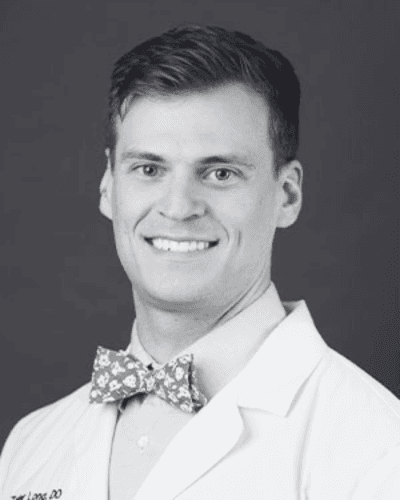
Your screening is performed by Tyler Long, DO, a board-certified dermatologist, alongside Kim Nguyen, NP-C. Because skin cancer is what we do, you get an exam from clinicians who look at this every day — and if something needs attention, evaluation and treatment happen in the same office.
Detection and treatment under one roof
If a screening turns up something suspicious, we can perform a biopsy on the spot and, when treatment is needed, handle it here — including excisions, cryotherapy, electrodesiccation and curettage, and field therapies such as photodynamic therapy. You are not handed a referral and sent across town to start over.
What Happens If We Find Something
Finding a spot at a screening is not cause for alarm — it is the system working. Here is the typical path, so there are no surprises:
- We take a closer look. Using dermoscopy, we examine the spot in detail. Many lesions that look concerning at arm's length are clearly benign under magnification, and no further action is needed.
- We biopsy if warranted. If a spot cannot be confidently cleared, we numb the area and take a small sample. It is a quick, minor procedure done the same day.
- The sample is analyzed. A pathologist examines the tissue, and we review the results with you and explain what they mean in plain language.
- We treat, if needed — here. If treatment is called for, most skin cancers and precancers can be managed in our office. We walk you through the options and what to expect.
The large majority of spots we examine turn out to be benign. The few that are not are exactly why an annual screening is worth it.
Serving The Villages, Lady Lake, and Wildwood
Our clinic is in Brownwood Square at 3614 Kiessel Road, central and easy to reach whether you are coming from The Villages itself, Lady Lake, or Wildwood. Parking is simple and the visit is efficient — plan on about 45 minutes for a full screening with Total Body Photography.
We see patients from across the area for routine annual screenings, follow-up of a spot they have noticed, and ongoing surveillance for those with a personal or family history of skin cancer.
Insurance and Booking
We accept Medicare and most major insurance. A skin cancer screening generally does not require a referral, so you can book directly.
Appointments are available through our Klara online scheduling system, or by phone. The easiest way to get on the calendar is to book your skin check online or call (352) 914-3451.
Frequently Asked Questions
How often should I have a skin cancer screening?
For most adults in Central Florida, once a year is a sensible baseline. If you have had skin cancer before, have many or atypical moles, or have a family history of melanoma, your clinician may recommend more frequent visits.
Does a skin cancer screening hurt?
No. A screening is a visual, hands-on examination of the skin. It is painless. If a spot needs a biopsy, the area is numbed first, and that is a quick, minor procedure.
How long does the appointment take?
Plan for about 45 minutes. The Total Body Photography imaging itself takes only seconds; the rest is the clinical exam and a review of anything of concern.
Do I need a referral to be seen?
Generally no. You can book a screening directly through our online scheduling or by phone.
What should I do to prepare?
Remove makeup and nail polish, skip heavy lotions or self-tanner, and wear your hair so the scalp can be examined. It is also helpful to note any spots that are new, changing, itching, or bleeding so you can point them out.
Where can I get a full-body scan for skin cancer near me?
If you are in The Villages, Lady Lake, or Wildwood, SpotDoc in Brownwood Square offers a full-body scan for skin cancer that pairs a head-to-toe clinical exam with total body photography — a baseline image map of your skin for tracking change over time. You can book directly online or by phone; a referral is generally not needed.
Book Your Skin Check
A yearly skin cancer screening is a small, simple step with an outsized payoff: the earlier a skin cancer is found, the easier it is to treat. If you are in The Villages, Lady Lake, Wildwood, or the surrounding area and it has been more than a year — or you have a spot on your mind — now is a good time to come in.
Book a skin check online or call (352) 914-3451.
Tyler Long, DO is a board-certified dermatologist and the lead physician at SpotDoc in The Villages, Florida. SpotDoc accepts Medicare and most major insurance; no referral is required for a skin cancer screening.
References
- American Cancer Society. Survival Rates for Melanoma Skin Cancer. cancer.org
- American Academy of Dermatology Association. Skin cancer: Detection and prevention. aad.org
- Skin Cancer Foundation. Early Detection and Self-Exams. skincancer.org