

For general education, not medical advice. This guide can’t diagnose you or replace care from your own clinician. If you’re worried about a spot or symptom, see a board-certified dermatologist.
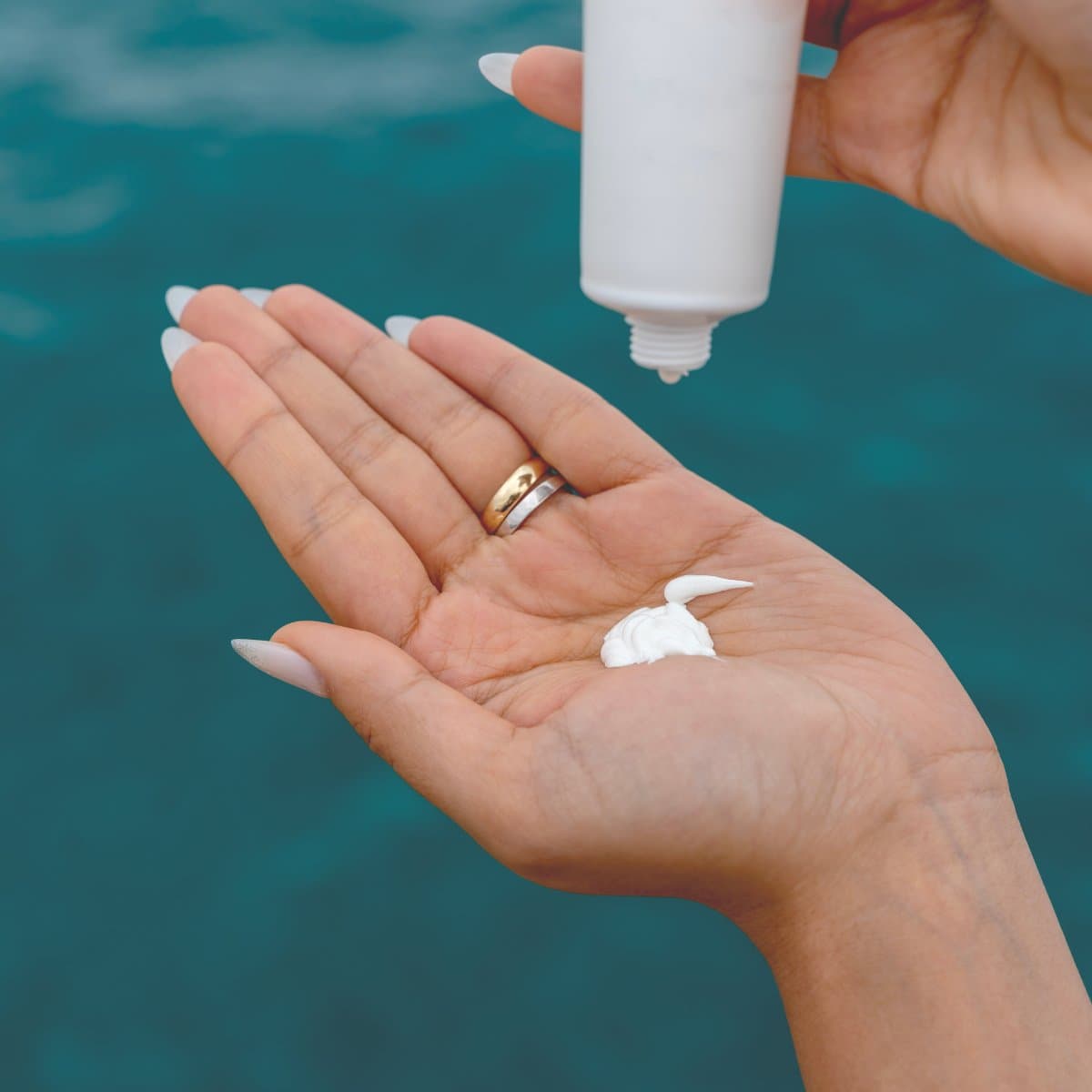
Sunscreen is a cream, lotion, or spray that blocks or absorbs the sun's ultraviolet (UV) rays before they damage your skin. Used every day, it is one of the simplest ways to lower your risk of skin cancer and to slow the wrinkling and spotting that come from sun. This guide explains what the research shows sunscreen actually prevents, how to pick and use one, and gives honest answers to the common worries about safety.
Key points
- Daily sunscreen has been shown in a randomized trial to lower squamous cell skin cancer, and the benefit lasted for years.1
- It also lowers precancers (actinic keratoses) and slows skin aging.23
- Sunscreen is one layer of sun protection, not the whole plan. Shade, clothing, and avoiding midday sun matter too.4
What sunscreen is and how SPF works
Sunscreens use two kinds of filters. Mineral filters (zinc oxide and titanium dioxide) sit on the skin and block UV. Chemical filters soak up UV and turn it into a tiny amount of heat. Both kinds lower the UV that reaches your skin.5
Two words on the label matter most:
- SPF (sun protection factor) measures protection against UVB, the rays that cause sunburn. Higher numbers block more.
- Broad spectrum means the product also guards against UVA, the rays tied to aging and skin cancer.
Most adults should use a broad-spectrum sunscreen of SPF 30 or higher. One catch: people almost always apply less than the amount used in lab tests, so the real protection is often well below the number on the bottle. In testing, typical use gave only about 20% to 50% of the labeled SPF.6 The fix is simple. Apply a generous layer, and reapply about every two hours and after swimming or sweating.
What the research shows it prevents
Sunscreen is studied more than almost any prevention step in skin care. The strongest evidence comes from a long randomized trial in Australia and from large follow-up studies. Here is what regular daily use does, outcome by outcome, including where the benefit is clear and where it is not.
In a randomized trial, daily sunscreen lowered squamous cell skin cancers, and the drop held up about 40% lower years after the trial ended. This is sunscreen’s strongest skin-cancer result.
Daily sunscreen led to fewer new precancers, with more of the existing ones fading. A review of many studies links regular sunscreen use to lower precancer risk.
A randomized trial pointed to about half the melanoma rate with daily use, though that result just missed the usual cutoff for proof. A large study of women found lower risk with SPF 15 or higher. The evidence leans positive but is not settled, partly because people who use sunscreen also tend to seek more sun.
Over about four years, people who used sunscreen daily showed 24% less skin aging than people who used it as they pleased.
The trials did not find a clear drop in basal cell carcinoma, likely because it is driven more by intense, on-and-off sun earlier in life and has a long lag before it appears. Rates did drift down with longer follow-up, just not enough to be certain. Sunscreen still helps most against precancers, squamous cell cancer, and skin aging.
Whole-body prevention, separate from the spot treatments above. “No effect” means good trials found no benefit. Every source is PubMed-verified; not medical advice.
A few honest notes on this table. The squamous cell and precancer results are the most solid. The melanoma result leans positive but is not settled: the one randomized trial just missed the usual line for proof, and the studies that follow large groups of people are mixed.78
The one result that surprises people is basal cell carcinoma, the most common but least dangerous skin cancer. The trials did not show a clear drop in it.9 That is not because sunscreen fails here. The reason is the kind of sun that drives each cancer. Squamous cell cancer and precancers track steady, lifelong sun, so cutting recent sun lowers them fairly quickly. Basal cell cancer is tied more to intense, on-and-off sun and to sunburns earlier in life, and it can take decades to appear.1011 Starting daily sunscreen as an adult, over a few years, acts too late and too briefly to undo that early risk. Even so, basal cell rates did drift downward with longer follow-up, just not enough to be certain.1 So the proof is strongest for squamous cell cancer and precancers, and sunscreen is still worth using to lower basal cell risk over a lifetime, especially when started early. Sunscreen helps, but it is not a force field, which is why it works best alongside shade and clothing.
Other options and questions patients ask about
People often arrive having read that sunscreen is harmful, or that a pill or a natural oil can replace it. Here are the honest answers.
- "Is sunscreen toxic, or does it cause cancer?" Studies show that some chemical filters are absorbed into the blood. That sounds alarming, but absorption is not the same as harm. The trials measured the blood levels. The researchers still said plainly that people should not stop using sunscreen. It means more study is needed, not that harm was found.1213 If you would rather avoid the chemical filters, the mineral options (zinc oxide and titanium dioxide) are a simple choice. These are the two filters US regulators have proposed are safe and effective.14
- "Will sunscreen leave me low on vitamin D?" In real life, daily sunscreen has only a small effect on vitamin D, and healthy people are unlikely to become deficient from it.1516 A 2025 trial of strong SPF 50+ use did find a small drop in vitamin D levels and recommended a supplement for routine users.17 The takeaway: keep using sunscreen, and if you are concerned, get your level checked or take a vitamin D supplement.
- "Can a pill protect me instead?" A supplement called Polypodium leucotomos can modestly raise the amount of sun your skin tolerates before burning.1819 But these studies measured sunburn thresholds, not skin cancer, and the effect is small. A pill is a possible add-on, never a replacement for sunscreen. Separately, for people who keep getting skin cancers, the vitamin nicotinamide (vitamin B3) has lowered new skin cancers in a trial; that is a different tool for high-risk patients, not a sunscreen substitute.20
- "Are natural oils like coconut oil a real sunscreen?" No. Household oils do not give reliable, broad-spectrum protection, and trusting them in strong sun can leave you burned. Use a tested product with an SPF on the label.
Does sunscreen cause melanoma? The honest answer
You may have seen the claim that sunscreen users get more melanoma. Some older studies did show that. It is worth understanding why. People who burn easily, sunbathe, or use tanning beds are the most likely to reach for sunscreen. They are also at higher risk of melanoma to begin with. So the sunscreen looked like the cause when the real driver was the sun-seeking.21 As products improved and studies got better, that false link faded. It was gone by the early 1990s.8 The one study type that removes this bias is the randomized trial, and it points toward benefit.22 The bottom line: sunscreen does not cause melanoma. But it is one layer of protection, not a reason to spend longer in the sun.
Using sunscreen as part of a bigger plan
Sunscreen works best with the other proven steps. National guidance recommends counseling young people with fair skin on sun protection, and the same habits help adults.4 Build the plan around:
- Sunscreen: broad spectrum, SPF 30 or higher, applied well and reapplied every two hours outdoors.
- Cover up: a wide-brimmed hat, long sleeves, and UV-blocking sunglasses.
- Time it: seek shade and avoid the midday sun, about 10 a.m. to 4 p.m., and skip tanning beds.
- Check your skin: see a dermatologist for any new, changing, or bleeding spot, and have regular skin exams if you are at higher risk.
When to see a doctor
Sunscreen lowers risk, but it does not erase it. Have a dermatologist check any spot that is new, growing, changing color, bleeding, or not healing. If you have had a lot of sun, fair skin, or a family history of skin cancer, ask about a yearly skin exam. Catching a skin cancer early is still the most reliable way to keep it small and easy to treat.
Worried about a spot?
SpotDoc offers full-body skin cancer screening in Brownwood Square, The Villages. No referral needed for most plans.
Frequently asked questions
What SPF should I use? Most adults should use a broad-spectrum sunscreen of SPF 30 or higher. Because people apply less than the tested amount, real protection is usually lower than the label, so apply a generous layer and reapply often.
Is mineral or chemical sunscreen better? Both lower UV exposure. Mineral filters (zinc oxide, titanium dioxide) sit on the skin and are a good choice if you prefer to avoid the chemical filters. The best sunscreen is the one you will actually wear every day.
Does sunscreen really prevent skin cancer? For squamous cell carcinoma and precancers, yes, that is shown in randomized trials. For melanoma the evidence leans positive but is not settled. For basal cell carcinoma the trials did not show a clear benefit, likely because that cancer is driven more by intense, on-and-off sun earlier in life and takes decades to appear. Across the board, sunscreen plus shade and clothing lowers risk.
Will daily sunscreen make me vitamin D deficient? Real-life use has only a small effect, and healthy people are unlikely to become deficient. If you are worried, a vitamin D supplement or a blood test settles it, and you can keep using sunscreen.
Do I need sunscreen on cloudy days or indoors near windows? UVA passes through clouds and window glass, so daily use on sun-exposed skin is reasonable if you spend time near bright windows or outdoors, even when it is overcast.
Can a pill replace sunscreen? No. Oral supplements may slightly raise how much sun your skin tolerates, but they are measured against sunburn, not skin cancer, and the effect is small. Use them only as an add-on, if at all.
Questions to ask your dermatologist
- Given my skin type and history, how much sun protection do I need?
- Is a mineral or chemical sunscreen a better fit for me?
- Should I be checked for vitamin D, or take a supplement?
- How often should I have a full skin exam?
- What kind of spot should make me call the office sooner?
Reviewed by Tyler Long, DO. Last updated June 2026.
Update log
How this guide has changed since it was first published.
- July 7, 2026Guide published.
References
Every statement on this page is backed by the peer-reviewed sources below — each links to the original study. Numbers match the citations in the text and the grids above.
- van der Pols JC, Williams GM, Pandeya N, Logan V, Green AC. Prolonged prevention of squamous cell carcinoma of the skin by regular sunscreen use. Cancer Epidemiol Biomarkers Prev. 2006;15(12):2546–2548.View source
- Thompson SC, Jolley D, Marks R. Reduction of solar keratoses by regular sunscreen use. N Engl J Med. 1993;329(16):1147–1151.View source
- Hughes MC, Williams GM, Baker P, Green AC. Sunscreen and prevention of skin aging: a randomized trial. Ann Intern Med. 2013;158(11):781–790.View source
- Grossman DC, Curry SJ, Owens DK, et al; US Preventive Services Task Force. Behavioral Counseling to Prevent Skin Cancer: US Preventive Services Task Force Recommendation Statement. JAMA. 2018;319(11):1134–1142.View source
- Glaser KS, Tomecki KJ. Sunscreens in the United States: Current Status and Future Outlook. Adv Exp Med Biol. 2020;1268:355–379.View source
- Stokes R, Diffey B. How well are sunscreen users protected? Photodermatol Photoimmunol Photomed. 1997;13(5–6):186–188.View source
- Green AC, Williams GM, Logan V, Strutton GM. Reduced melanoma after regular sunscreen use: randomized trial follow-up. J Clin Oncol. 2011;29(3):257–263.View source
- Silva ESD, Tavares R, Paulitsch FDS, Zhang L. Use of sunscreen and risk of melanoma and non-melanoma skin cancer: a systematic review and meta-analysis. Eur J Dermatol. 2018;28(2):186–201.View source
- Green A, Williams G, Neale R, et al. Daily sunscreen application and betacarotene supplementation in prevention of basal-cell and squamous-cell carcinomas of the skin: a randomised controlled trial. Lancet. 1999;354(9180):723–729.View source
- Leiter U, Garbe C. Epidemiology of melanoma and nonmelanoma skin cancer: the role of sunlight. Adv Exp Med Biol. 2008;624:89–103.View source
- English DR, Armstrong BK, Kricker A, Fleming C. Sunlight and cancer. Cancer Causes Control. 1997;8(3):271–283.View source
- Matta MK, Zusterzeel R, Pilli NR, et al. Effect of Sunscreen Application Under Maximal Use Conditions on Plasma Concentration of Sunscreen Active Ingredients: A Randomized Clinical Trial. JAMA. 2019;321(21):2082–2091.View source
- Matta MK, Florian J, Zusterzeel R, et al. Effect of Sunscreen Application on Plasma Concentration of Sunscreen Active Ingredients: A Randomized Clinical Trial. JAMA. 2020;323(3):256–267.View source
- Safian MT, Raja PB, Muniandy K, et al. The dual challenge of FDA-evaluated non-GRASE UV filters: photostability and systemic absorption. Int J Pharm. 2025;680:125790.View source
- Neale RE, Khan SR, Lucas RM, Waterhouse M, Whiteman DC, Olsen CM. The effect of sunscreen on vitamin D: a review. Br J Dermatol. 2019;181(5):907–915.View source
- Passeron T, Bouillon R, Callender V, et al. Sunscreen photoprotection and vitamin D status. Br J Dermatol. 2019;181(5):916–931.View source
- Tran V, Duarte Romero BL, Andersen H, et al. Effect of daily sunscreen application on vitamin D: findings from the open-label randomized controlled Sun-D Trial. Br J Dermatol. 2025;193(6):1128–1137.View source
- González S, Pathak MA, Cuevas J, Villarrubia VG, Fitzpatrick TB. Topical or oral administration with an extract of Polypodium leucotomos prevents acute sunburn and psoralen-induced phototoxic reactions as well as depletion of Langerhans cells in human skin. Photodermatol Photoimmunol Photomed. 1997;13(1–2):50–60.View source
- Keršmanc P, Pogačnik T, Žmitek J, Hristov H, Točkova O, Žmitek K. Effects of eight-week supplementation containing red orange and Polypodium leucotomos extracts on UVB-induced skin responses: a randomized double-blind placebo-controlled trial. Nutrients. 2025;17(7):1240.View source
- Chen AC, Martin AJ, Choy B, et al. A Phase 3 Randomized Trial of Nicotinamide for Skin-Cancer Chemoprevention. N Engl J Med. 2015;373(17):1618–1626.View source
- Ghiasvand R, Weiderpass E, Green AC, Lund E, Veierød MB. Sunscreen Use and Subsequent Melanoma Risk: A Population-Based Cohort Study. J Clin Oncol. 2016;34(33):3976–3983.View source
- Rueegg CS, Stenehjem JS, Egger M, et al. Challenges in assessing the sunscreen-melanoma association. Int J Cancer. 2019;144(11):2651–2668.View source
- Li Y, Wang J, Xiao W, Liu J, Zha X. Risk Factors for Actinic Keratoses: A Systematic Review and Meta-Analysis. Indian J Dermatol. 2022;67(1):92.View source