
Canfield Scientific, the company behind the VECTRA WB360 imaging system we use at SpotDoc, has announced a European regulatory milestone for two of its AI tools.
On September 29, 2026, Canfield reported that DEXI and Lesion Visualizer received CE marking under the European Union's Medical Device Regulation. The milestone concerns image-analysis software used alongside photography. Canfield lists DEXI and Lesion Visualizer as Class IIb and Class IIa medical devices, respectively. Read Canfield's announcement.
CE marking follows an assessment of conformity with the applicable European requirements. For medical devices, that includes requirements concerning safety and performance. It's a meaningful step in bringing medical technology to the European market. European Medicines Agency
Photography and analysis have different jobs
If you've had a 3D scan at SpotDoc, you've met the VECTRA WB360. It takes photographs that form a detailed 3D body map: a visual record of your skin that your clinician can return to at later visits. Close-up dermoscopic images can also be linked to spots on that map. How the VECTRA WB360 works.
Lesion Visualizer and DEXI are separate software tools within Canfield's DermaGraphix platform. Canfield states that both are available in the EU and remain for research use only in all other countries. Canfield's product information.
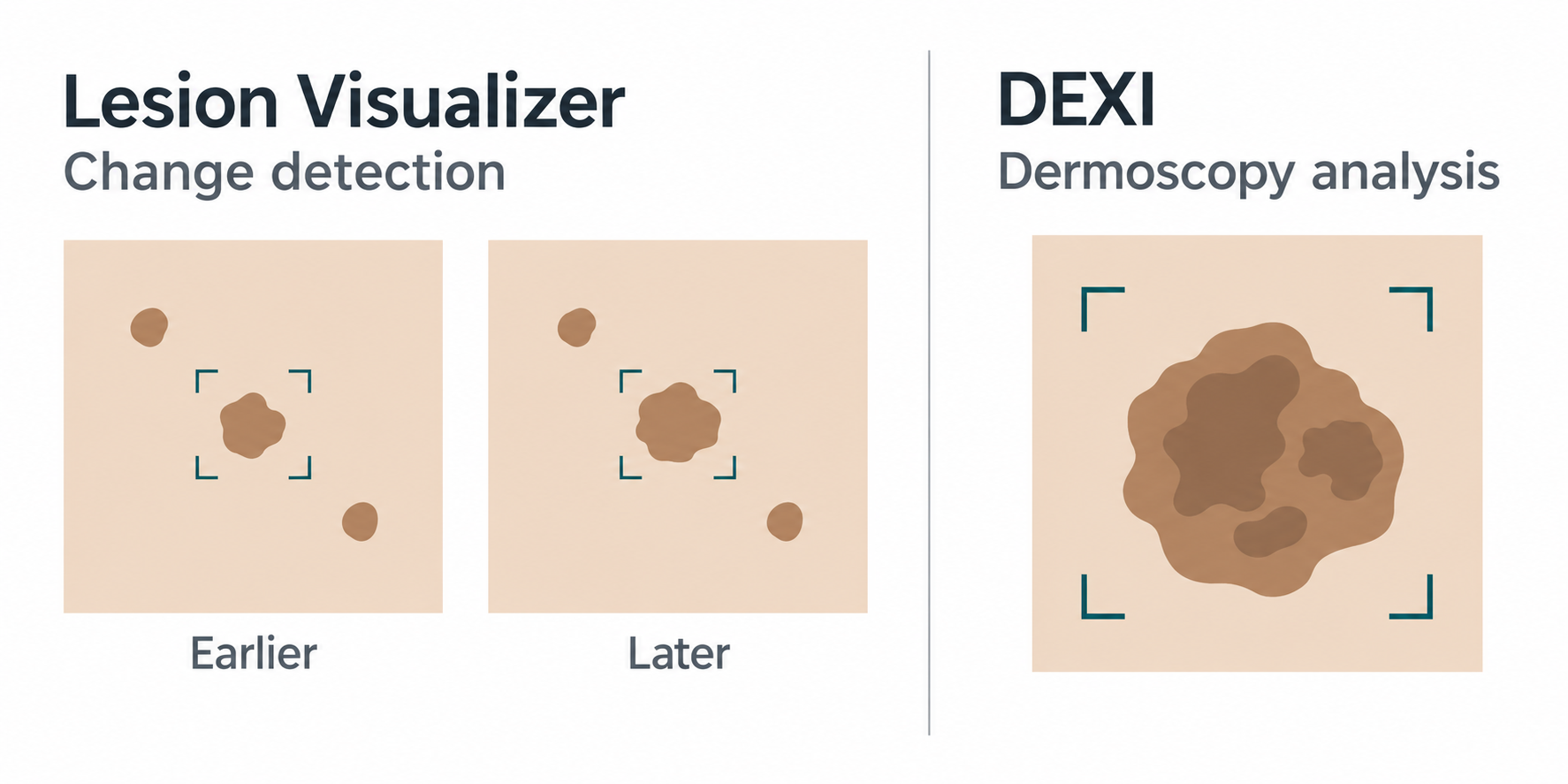
You may be less familiar with their names. Each helps clinicians examine information in skin images:
- Lesion Visualizer supports the detection of changes in skin lesions over time, helping clinicians review spots that may have changed between images. A lesion simply means a spot or area of skin being assessed.
- DEXI, short for Dermoscopy Explained Intelligence, uses AI to analyze dermoscopic images: close-up views taken with a specialized skin-imaging instrument. It provides decision support when a clinician assesses a suspicious spot for skin cancer.
Total body photography creates the visual record. These tools add analysis, with the clinician responsible for interpreting the findings. The new European CE markings apply to the two software tools. Canfield's software overview.
We'll take a closer look at Lesion Visualizer and DEXI in separate upcoming posts. For now, their different roles help explain why this announcement matters to a practice that uses Canfield imaging every day.
At Canfield's 2026 EADV user group meeting, Dr. Sarah Qaiyumi described a German program combining body photography, dermoscopy and remote dermatologist review. She discussed the new European certifications and emphasized that diagnostic decisions remain with the dermatologist. She also noted that clinical outcome data for the program were not yet available.
For us, that combination of technical progress and careful evaluation is worth following. Canfield's news speaks to the continuing development of the tools behind image-based skin assessment.
What the European milestone means here
European CE marking does not establish U.S. FDA clearance, and this announcement should not be read as a new authorization for SpotDoc's services.
At SpotDoc, the reason for building a photographic record is practical: when you come back, there are earlier images available to review. Technology supplies the record. Your clinician assesses what it means for your care.